about
Late summer is the perfect moment to get ahead on child care enrollment before fall routines demand more from your family. Preparing now eases the rush and ensures your child begins their school readiness preschool experience with confidence. This checklist will guide you through key steps like submitting enrollment forms daycare, organizing immunization records daycare, and scheduling a tour a daycare near me at Basic Beginnings in Haverhill, MA or Nashua, NH. Let’s make this transition smooth and welcoming for you and your little one. https://www.basicbegin.com/late-summer-enrollment-checklist-secure-child-care-before-fall-routines-begin/
Preparing for Late-Summer Enrollment
Navigating the enrollment process for child care can be a daunting task. Let’s break it down into manageable steps to ensure your child is set for success as the new school year approaches.
Setting Your Enrollment Timeline
Getting started early means less stress later. Begin by identifying key dates: application deadlines, tour scheduling, and form submissions. Mark these on your calendar to avoid any last-minute rush. The earlier you start, the more choices you’ll have for your child’s care.
Essential Enrollment Forms
Paperwork is inevitable, but knowing what’s needed can save valuable time. Gather your child’s birth certificate, proof of address, and any previous daycare records. Having these documents ready will streamline the process when filling out enrollment forms. Keep copies for your records as well.
Immunization Records and Health Documents
Staying up-to-date with vaccinations is crucial for a safe care environment. Contact your pediatrician to ensure your child’s immunization records are current. Include any pertinent health documents that detail allergies or special needs. This information helps caregivers provide the best possible care.
Setting Up for Success

Once the paperwork is in order, focus on the environment your child will enter. Preparing for this change can make a significant difference.
Touring and Applying for Daycare
Nothing beats seeing the place where your child will spend their days. Schedule a visit to Basic Beginnings in Haverhill, MA, or Nashua, NH. Walking through the space allows you to ask questions and observe the daily routine. Consider your child’s reactions and comfort level during the visit.
Transition Tips for New Beginnings
Change can be challenging for young ones. Gradually introduce new routines at home to mirror the daycare schedule. Practice separation in small doses to ease anxiety. Reinforce positive aspects like new friends and fun activities to build excitement.
Aligning Home and Daycare Routines
Consistency between home and daycare routines creates a sense of security for children. Align meal times, nap schedules, and playtime activities. This coherence helps your child adapt more quickly and confidently to their new environment.
Unique Offerings at Basic Beginnings

Basic Beginnings stands out for its commitment to meeting diverse family needs through specialized programs and flexible care options.
FAA and Federal Employee Benefits
For federal employees, Basic Beginnings offers unique benefits through a partnership with the FAA. These include priority placement, subsidies, and flexible care options. This support ensures your childcare needs align with your work commitments.
Flexible Scheduling with Extended Hours
Busy schedules demand flexibility. In Nashua, NH, Basic Beginnings offers extended hours and weekend care. This service is perfect for parents working nontraditional hours, providing the peace of mind that your child is cared for beyond standard daycare times.
Individualized Learning and Care
Every child is unique, and so is their learning journey. Basic Beginnings provides individualized support tailored to each child’s needs. Their approach fosters both academic and social-emotional growth, preparing your child for future educational success.
Frequently Asked Questions
What documents do I need for daycare enrollment?
You’ll need your child’s birth certificate, proof of address, immunization records, and any relevant health documents.
How can I prepare my child for starting daycare?
Introduce routines similar to the daycare schedule at home, practice short separations, and talk about the exciting new experiences they’ll have.
What are the benefits for FAA employees at Basic Beginnings?
FAA employees can enjoy benefits like priority placement, subsidies, and flexible care options, making it easier to balance work and childcare.
How does Basic Beginnings support children’s individual learning needs?
They offer individualized learning plans that focus on both academic and social-emotional development, ensuring your child is challenged and supported appropriately.
Are there extended hours available at Basic Beginnings?
Yes, the Nashua location provides extended hours and weekend care to accommodate parents with nontraditional work schedules.
Learn More!
Choosing child care that truly supports your child’s growth can feel overwhelming. You want a place that builds school readiness, encourages emotional development, and keeps daily routines consistent. Knowing what to look for makes all the difference. In this guide, you’ll learn key points to evaluate child care in Haverhill, MA, and Nashua, NH—and see how Basic Beginnings stands ready to partner with your family. For more detailed insights, check out our parent’s checklist.
Evaluating Child Care for School Readiness
Understanding what sets a childcare program apart involves knowing the right criteria. Let’s explore what makes for good school readiness in a childcare setting.
Key Criteria for School Readiness
Choosing the right childcare center hinges on a few crucial factors. First, look for programs that prioritize play-based learning. This approach fosters creativity and critical thinking. Next, seek out centers offering structured routines. Consistency helps children feel secure and ready to learn. Lastly, consider the teacher-to-child ratio. Small groups mean more personalized attention, allowing each child to thrive.
To illustrate, a childcare center like Basic Beginnings uses play, stories, and projects to prepare children for school. This method not only builds academic skills but also boosts social confidence. For more insights, visit this resource.
Importance of Pre-K Readiness Skills
Pre-K readiness is about more than just knowing ABCs. At this stage, children should develop social skills and emotional resilience. These abilities lay the groundwork for future success in school and beyond. A good program will nurture these skills through activities that encourage collaboration and empathy.
Basic Beginnings integrates these elements into daily learning, ensuring kids not only learn to count but also learn to care. This holistic approach makes transitioning to kindergarten smoother and more enjoyable. For a deeper dive into the importance of these skills, check out this article.
Supporting Emotional Growth in Child Care

Emotional growth is as important as academics. A nurturing environment can significantly influence a child’s development.
Social Emotional Learning in Early Childhood
Social-emotional learning is about helping children manage emotions and build relationships. Look for programs that focus on interaction and communication. Kids who learn to express themselves and work with others become more adaptable and resilient.
At Basic Beginnings, teachers guide children in exploring feelings, which helps them connect with peers. This focus on emotional intelligence sets the stage for lifelong learning and cooperation. To explore more about this, visit this link.
Benefits of a Safe Nurturing Environment
A safe environment is critical for emotional and physical development. Children need to feel secure to explore and learn. Look for centers with low staff turnover and positive teacher interactions. A stable, friendly atmosphere boosts confidence and encourages participation.
Basic Beginnings prides itself on providing a secure space where children feel valued and understood. This nurturing backdrop supports both emotional and academic growth, helping children flourish. Check out more about the benefits of daycare here.
Reinforcing Daily Routines and Family Needs

Daily routines are the backbone of a child’s day. They provide predictability and comfort, essential for young learners.
Importance of Toddler Daily Routines
Routines give toddlers a sense of security. From meal times to naps, having a predictable schedule helps them understand and manage their day. This predictability fosters independence and self-discipline.
At Basic Beginnings, daily routines are carefully structured to meet the needs of each child. This consistency helps them adjust to new environments and build self-confidence. For a better understanding of toddler routines, read more here.
Flexible Scheduling and Extended Hours
Flexibility in scheduling is crucial for families with varying needs. Centers that offer extended hours or weekend care can be lifesavers. This flexibility supports working parents and ensures children receive consistent care.
Basic Beginnings offers extended hours, particularly at their Nashua location, accommodating busy schedules and providing peace of mind for parents. Explore flexible childcare solutions at Basic Beginnings to see how they can support your family’s needs.
Frequently Asked Questions
What makes a childcare program good for school readiness?
A program that emphasizes play-based learning, structured routines, and low teacher-to-child ratios is ideal for school readiness. These elements help develop critical thinking and social skills.
How does social-emotional learning benefit young children?
Social-emotional learning helps children manage emotions and build relationships, leading to better adaptability and cooperation skills, which are crucial for school and life.
Why are daily routines important for toddlers?
Daily routines provide toddlers with a sense of security and predictability, fostering independence and self-discipline, which are essential for their development.
What should I look for in a childcare environment?
Look for a stable, friendly atmosphere with low staff turnover and positive teacher interactions. A nurturing environment supports both emotional and academic growth.
How can flexible childcare options benefit my family?
Flexible options like extended hours and weekend care accommodate varying schedules, ensuring consistent care for your child and peace of mind for you.
Learn More!
Safe and healthy classrooms do more than protect your child—they set the stage for their brain growth, social skills, and readiness for school. When you choose licensed childcare in Haverhill, MA or Nashua, NH, you want to know that daycare safety standards and preschool health and safety practices support your child’s whole development. At Basic Beginnings, our secure entry childcare, low teacher-child ratios, and cleaning protocols create a nurturing space where your child can thrive. Keep reading to see how these elements come together to build a strong foundation for early childhood development. Learn more about the importance of early childhood education here. 😊
Importance of Safe, Healthy Classrooms
Safe, healthy classrooms are crucial for nurturing early childhood development. They provide an environment where children can feel secure, allowing for optimal brain growth and the building of essential skills.
Brain Growth and Development
In a secure environment, your child’s brain is primed for growth. During early years, the brain forms connections rapidly. A supportive setting enhances this process. Studies show that nurturing environments can boost cognitive functions. At Basic Beginnings, we prioritize such settings to stimulate your child’s brain.
Children experience numerous stimuli daily. Encouraging curiosity and exploration aids in brain development. Activities are crafted to engage your child’s senses, fostering neural connections. This approach ensures their cognitive potential is fully realized.
Regular interactions with peers and teachers further support brain development. Through play and structured activities, children learn problem-solving and critical-thinking skills. These interactions form the bedrock for lifelong learning.
Social-Emotional Skills Building
Social-emotional skills are vital for your child’s development. They form the basis for relationships and self-awareness. In our programs, children learn to express feelings and empathize with others.
At Basic Beginnings, we use play to teach these skills. Role-play and group activities allow children to interact and learn empathy. They become adept at understanding their emotions and those of others, leading to better social interactions.
Emotional security is a key focus. Children feel safe to express themselves, knowing they are valued. This security helps them form positive relationships with peers and adults, a critical aspect of social development.
Preparing for School Readiness
Preparing your child for school involves developing various skills. This includes literacy, numeracy, and social abilities. Our programs at Basic Beginnings are designed to cover these areas comprehensively.
Children engage in activities that promote literacy and numeracy. From storytime to counting games, they learn foundational skills for academic success. These skills are crucial for a seamless transition to formal schooling.
Our focus on school readiness also includes social skills. Children learn to cooperate, share, and follow instructions. These abilities are essential for thriving in a school setting. By fostering these skills, we ensure your child is prepared for their educational journey.
How Basic Beginnings Ensures Safety

Ensuring safety in childcare is paramount. At Basic Beginnings, our measures are designed to create a safe and nurturing environment for your child.
Daycare Safety Standards
Our daycare safety standards are rigorous. We adhere to state regulations to ensure a safe environment. Regular inspections and staff training are part of our commitment to safety.
The safety of your child is our top priority. We have protocols in place for various scenarios. This includes emergency drills and secure entry systems. These measures ensure your child’s safety at all times.
By maintaining high safety standards, we provide peace of mind. You can be confident that your child is in a secure environment, allowing them to learn and grow without worry.
Cleaning and Sanitation Protocols
Cleanliness is essential for a healthy childcare environment. Our cleaning and sanitation protocols ensure that spaces are hygienic and safe for children.
Daily cleaning schedules are followed rigorously. High-touch surfaces are sanitized frequently to prevent the spread of germs. This attention to cleanliness minimizes the risk of illness, keeping your child healthy.
Our commitment to hygiene extends to all areas, including play equipment and classrooms. By maintaining a clean environment, we create a foundation for your child’s health and well-being.
Low Teacher-Child Ratios and Secure Entry
A low teacher-child ratio ensures personalized attention. At Basic Beginnings, we maintain small class sizes to provide individual support. This allows for tailored learning experiences for your child.
Secure entry systems are another layer of safety. Only authorized individuals can access the facility, ensuring your child’s security. This controlled access gives you confidence in your child’s safety.
Together, these measures create an atmosphere where children can thrive. They receive the attention they need while parents enjoy peace of mind knowing their child is in a safe environment.
Encouraging Parent-Teacher Partnerships
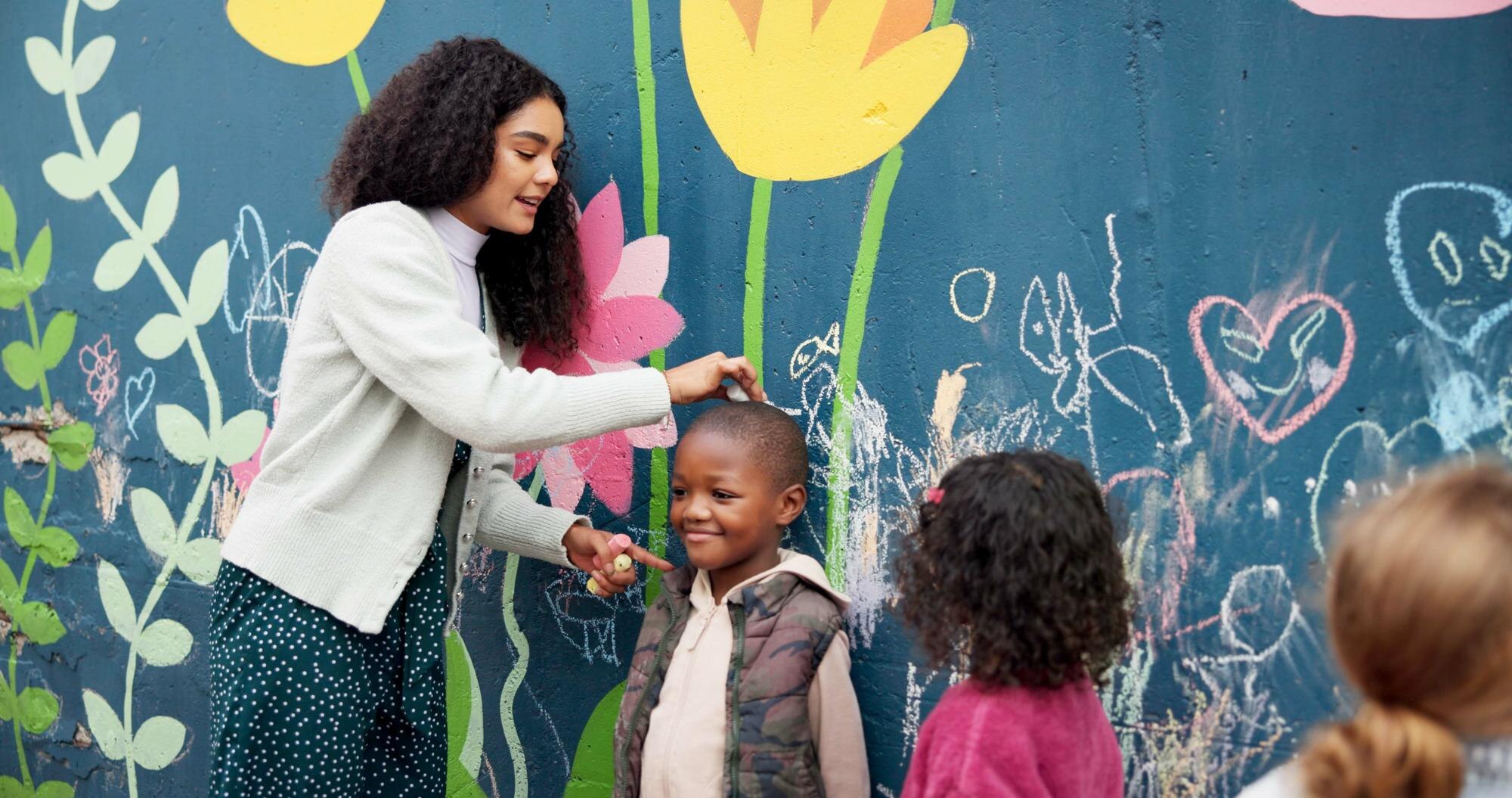
Parent-teacher partnerships are vital for your child’s development. At Basic Beginnings, we foster these relationships to support your child’s growth.
Individualized Learning Plans
Each child is unique, and so is their learning journey. Our individualized learning plans cater to your child’s specific needs and abilities. These plans are customized to support their development.
Regular assessments help track progress. Parents are involved in the planning process, ensuring alignment between home and school. This collaboration enhances your child’s learning experience.
By working together, we can better support your child’s growth. Understanding their needs allows us to provide the right guidance and encouragement.
Positive Guidance Approach
Positive guidance is central to our teaching philosophy. We focus on encouraging positive behaviors through reinforcement rather than punishment.
Children are guided to make good choices. This approach builds self-discipline and responsibility. It also fosters a positive learning environment where children feel valued and respected.
With positive guidance, children learn to manage their emotions and behavior. This prepares them for future interactions, both in and outside of school.
Community Engagement and Tours
Community engagement is important to us. We believe in building strong connections with families. Regular tours and events foster this engagement, creating a sense of community.
Families are encouraged to participate in school activities. This involvement strengthens relationships between parents, teachers, and children. It also provides insights into your child’s learning environment.
Through community engagement, we build a supportive network. This network enhances the learning experience and creates a welcoming atmosphere for all families.
🌟👶🏫
Frequently Asked Questions
Why is a safe classroom important for early childhood development?
A safe classroom provides a secure environment where children can focus on learning and development without distractions or fear. It supports brain growth, social-emotional skill building, and prepares children for school readiness.
How does Basic Beginnings ensure safety in their daycare centers?
Basic Beginnings implements rigorous daycare safety standards, including secure entry systems, regular inspections, and staff training. These measures ensure children are in a safe, nurturing environment at all times.
What role do parents play in their child’s education at Basic Beginnings?
Parents are essential partners in their child’s education at Basic Beginnings. Through individualized learning plans and regular communication, parents collaborate with teachers to support their child’s unique learning journey.
Learn More!
Choosing a Daycare That Builds School Readiness and Emotional Strength: A Parent’s Checklist
Choosing the right daycare in Haverhill, MA or Nashua, NH means more than just finding a safe spot for your child. You want a place that prepares them for school while supporting their emotional growth. This checklist helps you see what matters most in early childhood education, so your child can thrive in a play-based curriculum with caring teachers and a strong parent partnership. Keep reading to learn what to look for—and why Basic Beginnings checks every box. Learn more.
Evaluating Daycare Centers

Identifying the ideal daycare can feel daunting, yet it’s crucial for your child’s growth. The right center not only nurtures school readiness but also supports emotional development. Let’s explore what factors to consider.
Key Factors for School Readiness
Choosing a center that lays a solid educational foundation is key. Look for programs that focus on cognitive and social skills. A strong preschool curriculum prepares kids for kindergarten by teaching basic math, literacy, and problem-solving skills.
Check to see if centers align with state preschool standards. This ensures a structured learning environment. Facilities with a proven record of success in fostering school readiness often showcase these credentials. Also, ask about teacher qualifications. Educators trained in early childhood education can better tailor lessons to young learners’ needs.
It’s also vital that the daycare encourages curiosity. Children should have the freedom to explore and ask questions. This kind of environment stimulates a love for learning, which is essential for academic success.
Assessing Emotional Development Support
Emotional growth is equally crucial. A supportive daycare provides an environment where children feel safe and valued. Teachers play a big role here. They should be attentive and responsive, helping kids navigate emotions.
Look for centers that incorporate social-emotional learning (SEL) into daily activities. SEL teaches kids how to manage emotions and build relationships. This makes them more resilient and empathetic. One study highlighted that SEL in early childhood can lead to fewer behavioral problems later on.
Observe how staff interact with children. Warmth and patience are signs of a nurturing environment. A good daycare promotes positive interactions, teaching kids empathy and cooperation. These skills are foundational for lifelong emotional health.
Understanding Curriculum and Programs

A holistic approach to early education goes beyond academics. Programs should cater to all facets of a child’s development. Let’s delve into the types of curricula that support this growth.
Importance of Play-Based Learning
Play is a powerful learning tool. It might seem like just fun, but it’s integral to development. Through play, children learn social skills and critical thinking. It encourages creativity and helps them understand the world.
A play-based curriculum engages children and makes learning enjoyable. Teachers guide play to include educational elements. This method helps kids retain information better. For instance, building blocks can teach math concepts like counting and geometry.
Quality centers understand play’s importance. They provide varied activities that stimulate both the mind and body. Look for programs that balance structured learning with ample playtime. These environments foster well-rounded development.
Benefits of Individualized Learning Plans
Every child is unique, and their learning plan should reflect that. Individualized plans cater to a child’s strengths and address areas needing improvement. This tailored approach maximizes potential and builds confidence.
Ask if the daycare uses personalized learning strategies. Centers that craft individualized plans often assess each child’s progress regularly. This ensures they meet developmental milestones.
Personalized plans also involve parents. You’ll receive updates and can contribute insights about your child’s needs. This collaboration supports consistent learning both at home and in the center.
Parent-Teacher Partnerships
Strong partnerships between parents and teachers amplify a child’s growth. Let’s explore how collaboration benefits your family and the center.
Building Strong Communication Channels
Communication is the cornerstone of successful partnerships. Regular updates from teachers keep you informed about your child’s development. This allows you to address any concerns promptly.
Quality centers use various communication methods. From newsletters to digital platforms, they ensure you’re part of the learning journey. Open lines foster trust and reinforce the team effort in nurturing your child’s growth.
Frequent feedback sessions are also valuable. They offer a chance to discuss progress and set goals. This proactive approach ensures your child’s needs are always at the forefront.
Involving Parents in Child’s Development
Involving parents in educational activities strengthens the learning experience. Some centers invite parents to participate in class projects or volunteer events. This involvement shows your child that education is a shared priority.
Look for daycare centers that encourage parental involvement. A study revealed that active parental participation can enhance a child’s academic achievement and social skills. Being part of your child’s education journey creates a supportive network.
These partnerships also help you understand teaching methods. You can reinforce lessons at home, providing a consistent learning environment. This collaboration lays a strong foundation for your child’s future successes.
Choosing the right daycare involves more than just facilities or location. It’s about finding a place that nurtures both academic and emotional growth. With these insights, you’re better equipped to make an informed decision. Your child deserves a nurturing start, and with the right daycare, they’ll be set for a bright future.
Learn More!